The Extra Steps Inside an Ordinary Order
Two orders can look alike until one needs a change, a call or a second attempt. Add the steps to see why the work differs.
One sandwich, or one sandwich plus a request?
Maya can make an ordinary sandwich in 3 minutes. A customer asks for it cut into four pieces and packed in two separate boxes. That takes 2 more minutes.
Both purchases say “one sandwich.” One needs 3 minutes; the other needs 3 + 2 = 5 minutes. The extra steps explain the difference.
This mental model is a small recipe for work: ordinary steps + extra steps = the whole job.

A hotel booking example
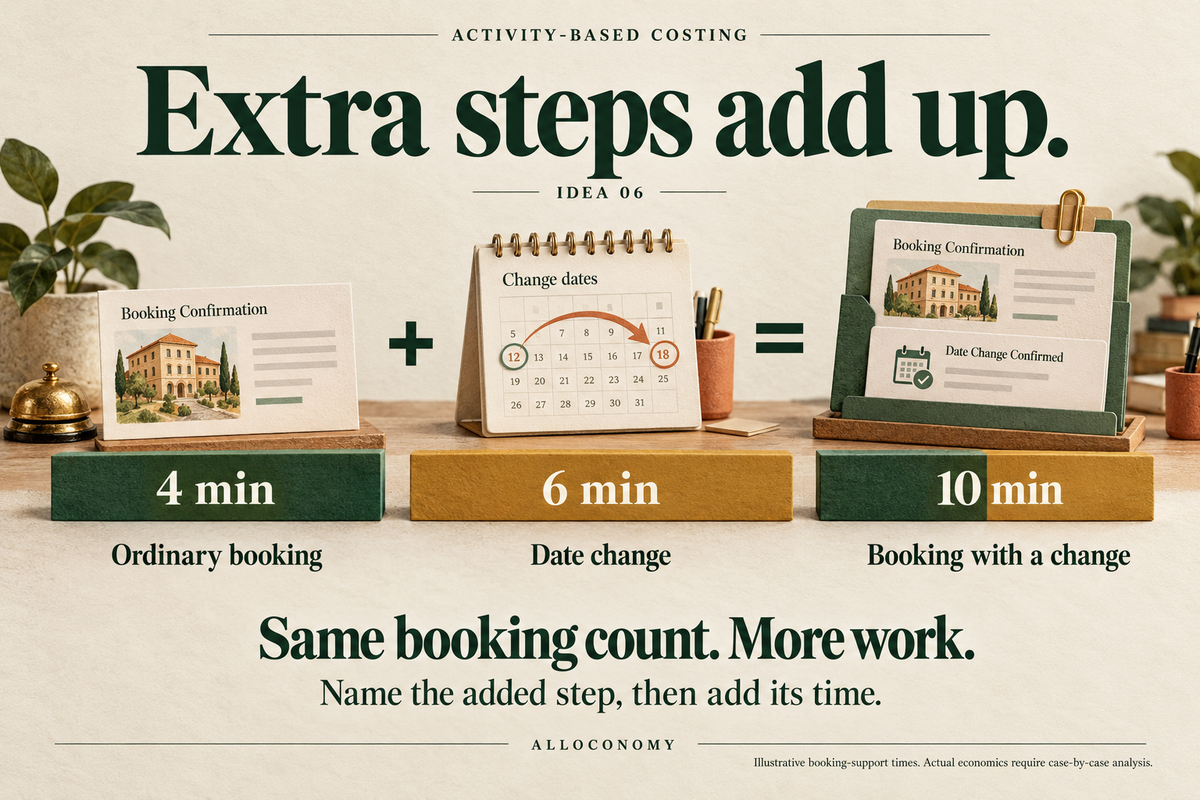
Imagine a hotel booking site's support desk. Processing a simple booking takes 4 minutes. A request to change dates adds 6 minutes. These are invented teaching times for the booking site's work, not the hotel's cleaning or room-service work.
An unchanged booking uses 4 minutes. A booking with one date change uses 10 minutes. If support time costs 50 cents a minute, the assignments are $2 and $5.
We could count both as one booking and miss the difference. Or we could record the extra step and explain it plainly.
The number of extra steps often matters more than a vague label such as “difficult customer.” Naming the step also gives the business something it can improve.
Apply it to DoorDash delivery
A restaurant order may be ready for collection with clear delivery instructions. Another may involve a wait or a support conversation. A grocery order can involve finding an item and discussing a replacement when it is unavailable. DoorDash describes that shopping and replacement work in its Shop & Deliver guide.
These steps use time. A useful example separates the Dasher's delivery work, the merchant's work and DoorDash's own support activity. Minutes worked by one participant are not automatically minutes worked by another.
We are not estimating actual DoorDash costs or driver earnings. We are practising how to describe the extra work.
Apply it to software setup
A SaaS customer may create an account and begin immediately. Another may need old data moved into the app and a lesson on using it. Both are “one new customer,” but the setup steps differ.
The business could offer a standard setup and a separately described assisted setup. Or it could improve the import tool so fewer people need help. Following the extra steps reveals both options.
Try it
An ordinary package needs 5 minutes to prepare. Gift wrapping adds 3 minutes. A handwritten note adds 2. How long does an order with both additions take? Answer: 10 minutes. The plain order still needs 5.
Carry this idea: explain the extra work with a named step before giving it a cost.
Source
Kaplan and Anderson explain how transaction characteristics can add time to a job. These everyday examples keep that idea to simple addition.
← Available and used capacity · Follow the customer journey →