Book Preview - From Tokens to Atoms
Book preview for From Tokens to Atoms: the token may be cheap, but the physical stack beneath it is not. What must change for digital abundance to become human abundance?
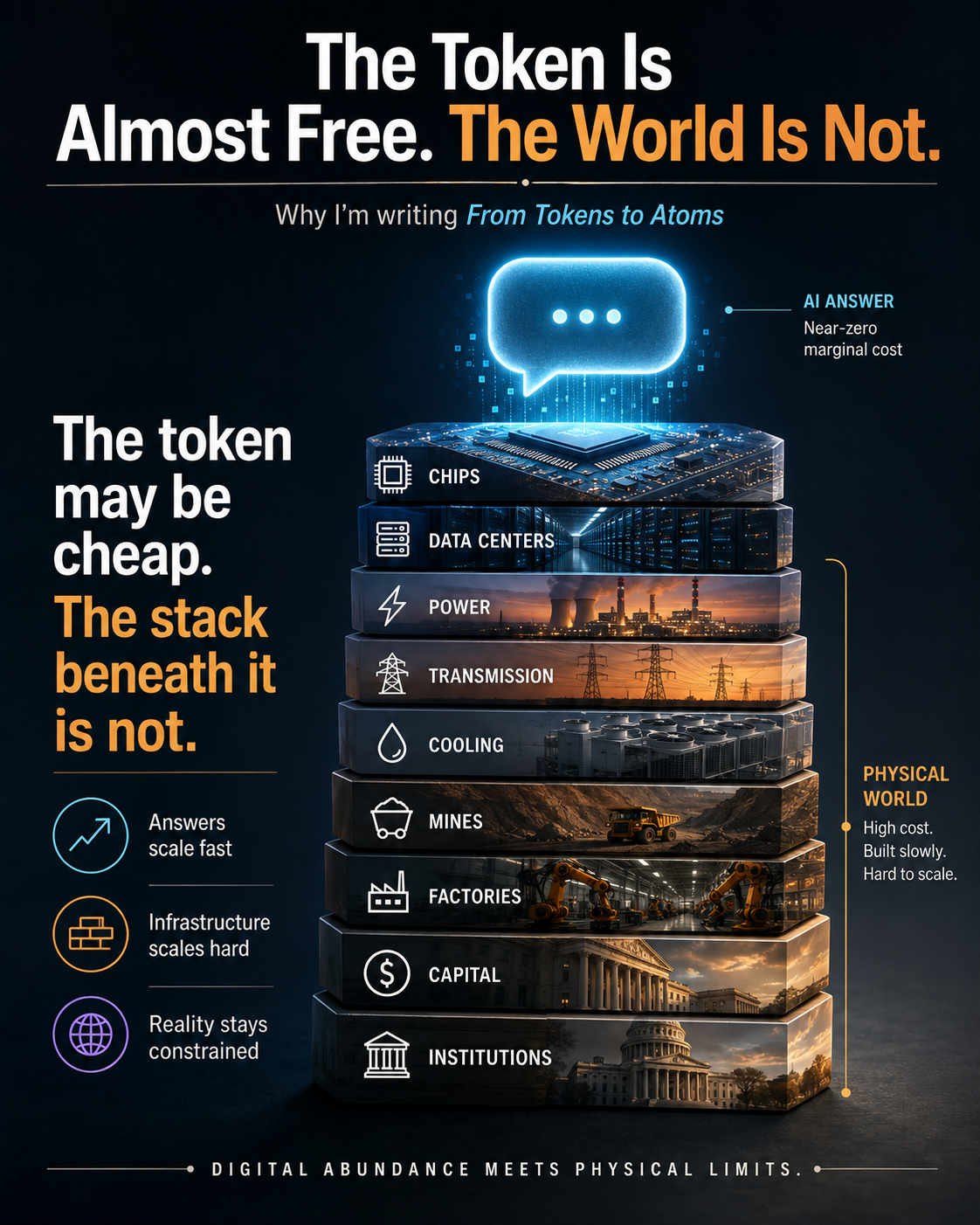
The Token Is Almost Free. The World Is Not.
Why I’m writing From Tokens to Atoms? Years spent working with unit economics trained me to ask an unfashionable question whenever a technology looks magical:
If an answer can become nearly free, why doesn’t everything else?
Then the AI tsunami arrived, and the question became personal.
What happens to my job when a machine can draft, analyze, code, and work through problems beside me?
Excellent works by Eric Jorgensen spreading thoughts from Elon, Naval, and Balaji - plus the famous claims about abundance from Elon himself, as well as reading works similar to Yuval Noah Harari’s Nexus - widened my horizon from the next job cycle to the next twenty years. That question became From Tokens to Atoms.
Scene one: the nearly free answer
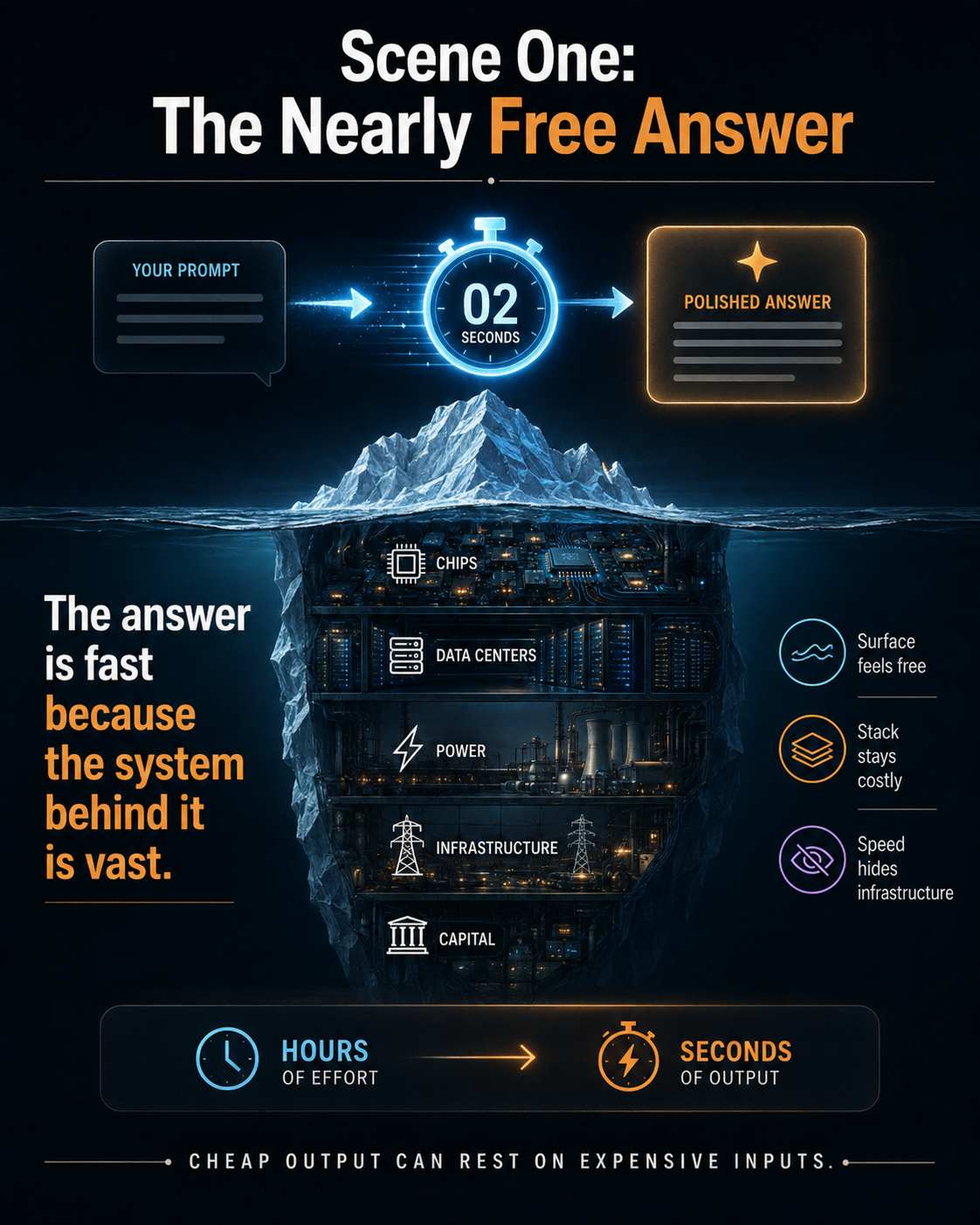
On some bounded tasks, a model can produce in seconds a first draft that once took hours.
But beneath that weightless answer sits an industrial mountain: chips, data centers, transmission lines, cooling systems, mines, factories, capital, and institutions.
The token may be cheap. The stack beneath it is not.
Scene two: fluent is not finished
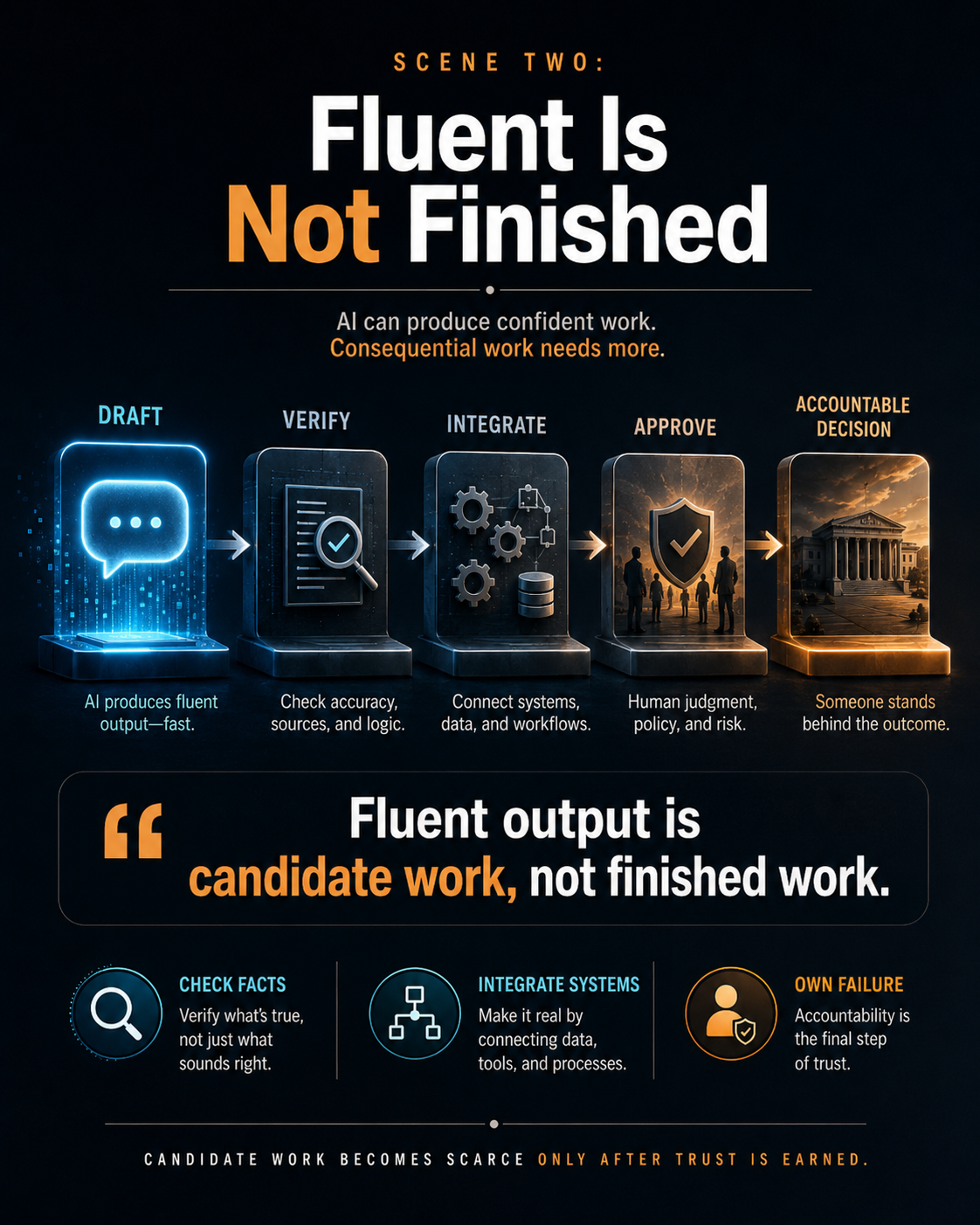
An agent can produce a confident analysis, engineering plan, or financial model.
Can anyone rely on it?
For consequential use, a real workflow may still need verification, integration, assigned liability, and someone accountable when it fails.
Candidate work is becoming abundant. Accepted, accountable work may remain scarce.
Scene three: the token reaches for an arm
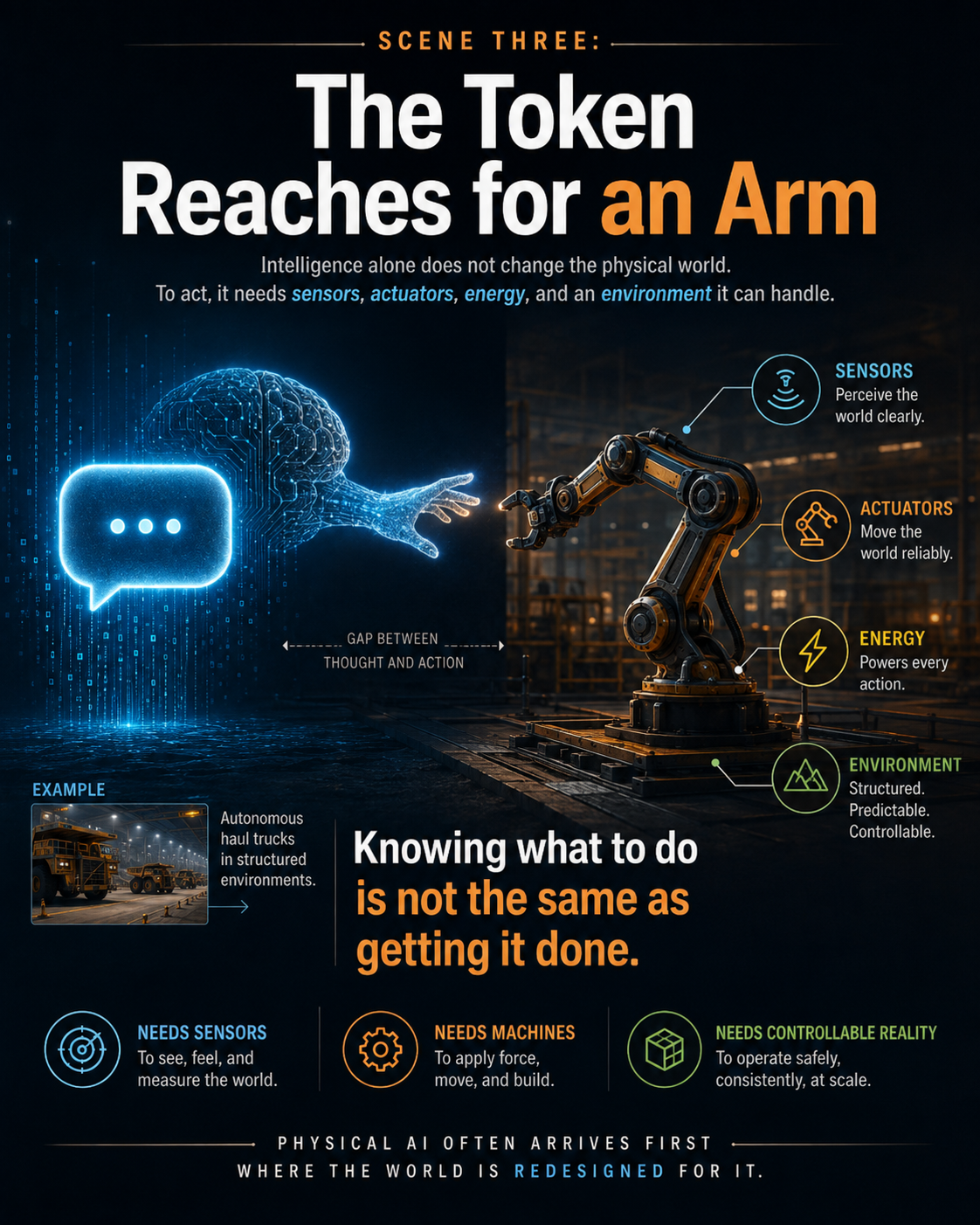
A perfect instruction cannot tighten a bolt.
Intelligence needs sensors, machines, energy - and the ability to survive heat, dust, disorder, and human unpredictability.
Autonomous haul trucks already move material through mapped routes and controlled traffic. Their deployment suggests something subtle: physical AI may arrive first where we redesign the environment around the machine.
The gap between “I know what to do” and “it has been done” is the distance between tokens and atoms.
Remove one constraint and the next steps into the light.
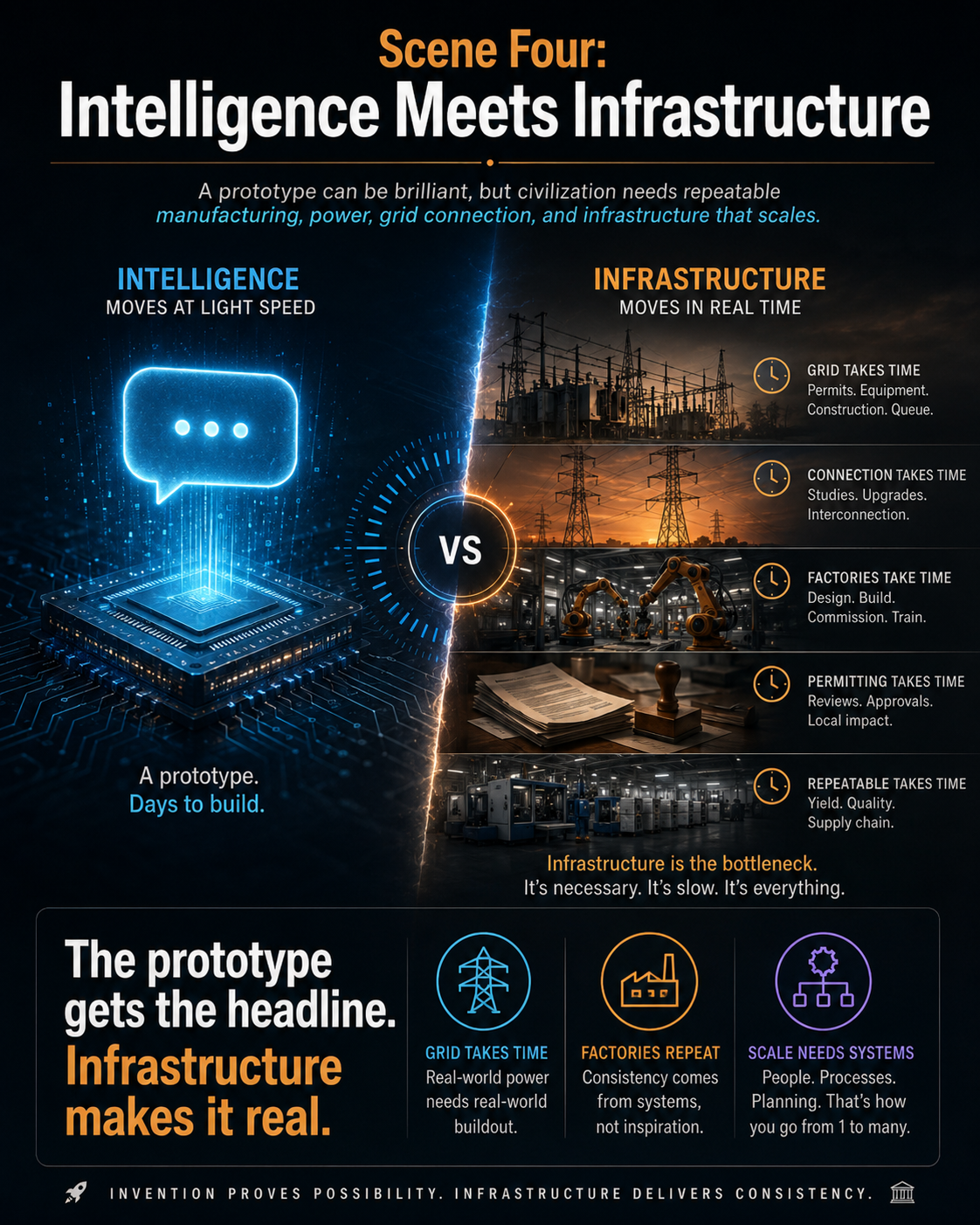
Scene four: intelligence meets infrastructure
Then a server hall waits for a grid connection. A chip can be designed faster than a substation can be permitted and built.
A prototype can work beautifully once. Civilization needs it to work repeatedly, at consistent quality and viable cost.
The prototype gets the headline. Reproducible manufacturing is what can turn an invention into productive capacity.
Scene five: the automated house is still expensive
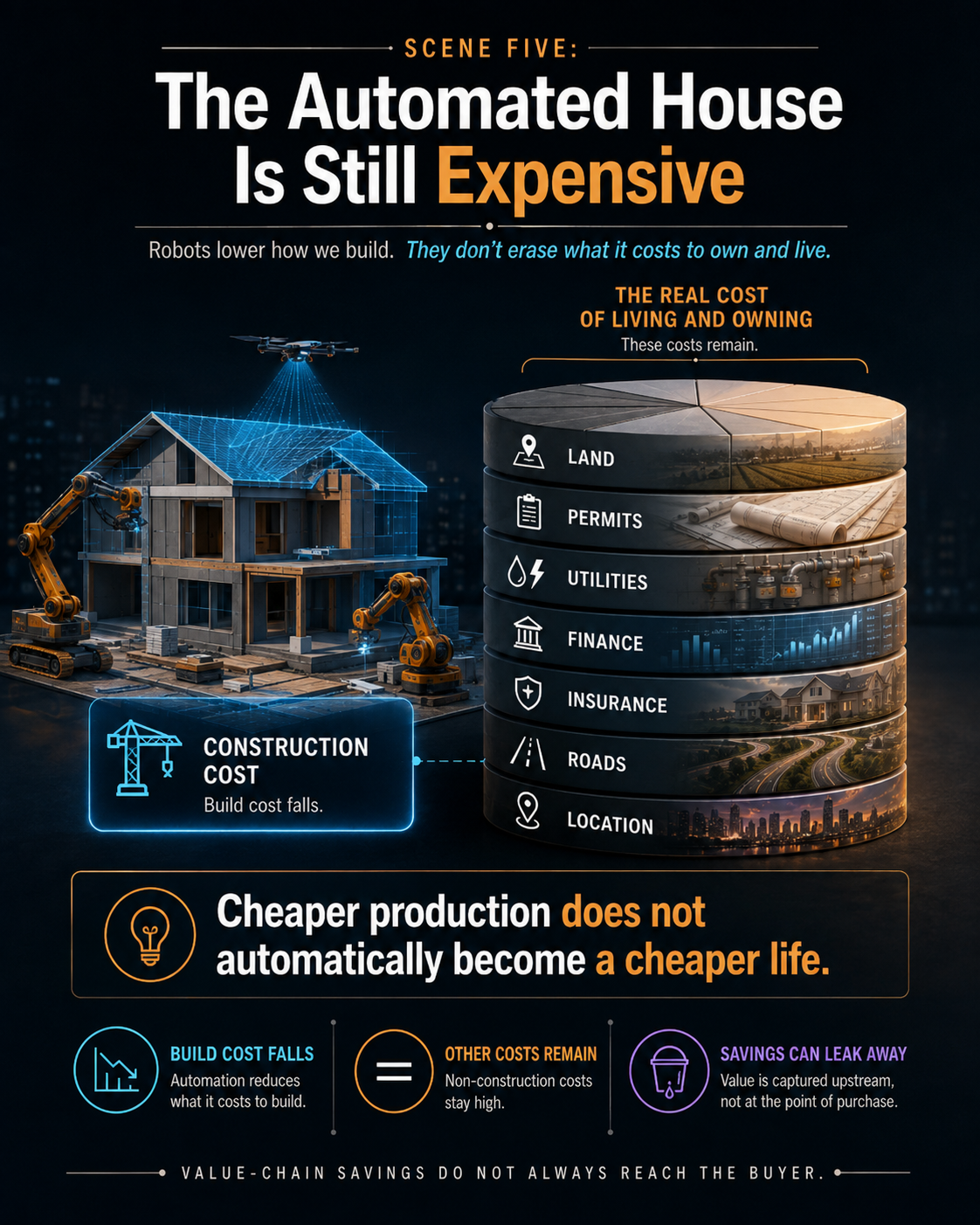
Suppose robotics sharply cuts the cost of constructing a home.
The buyer still pays for land, permits, utilities, finance, insurance, roads, and location.
Cheaper production does not automatically become a cheaper life. Savings must survive the value chain.
Scene six: abundance reaches the first rung
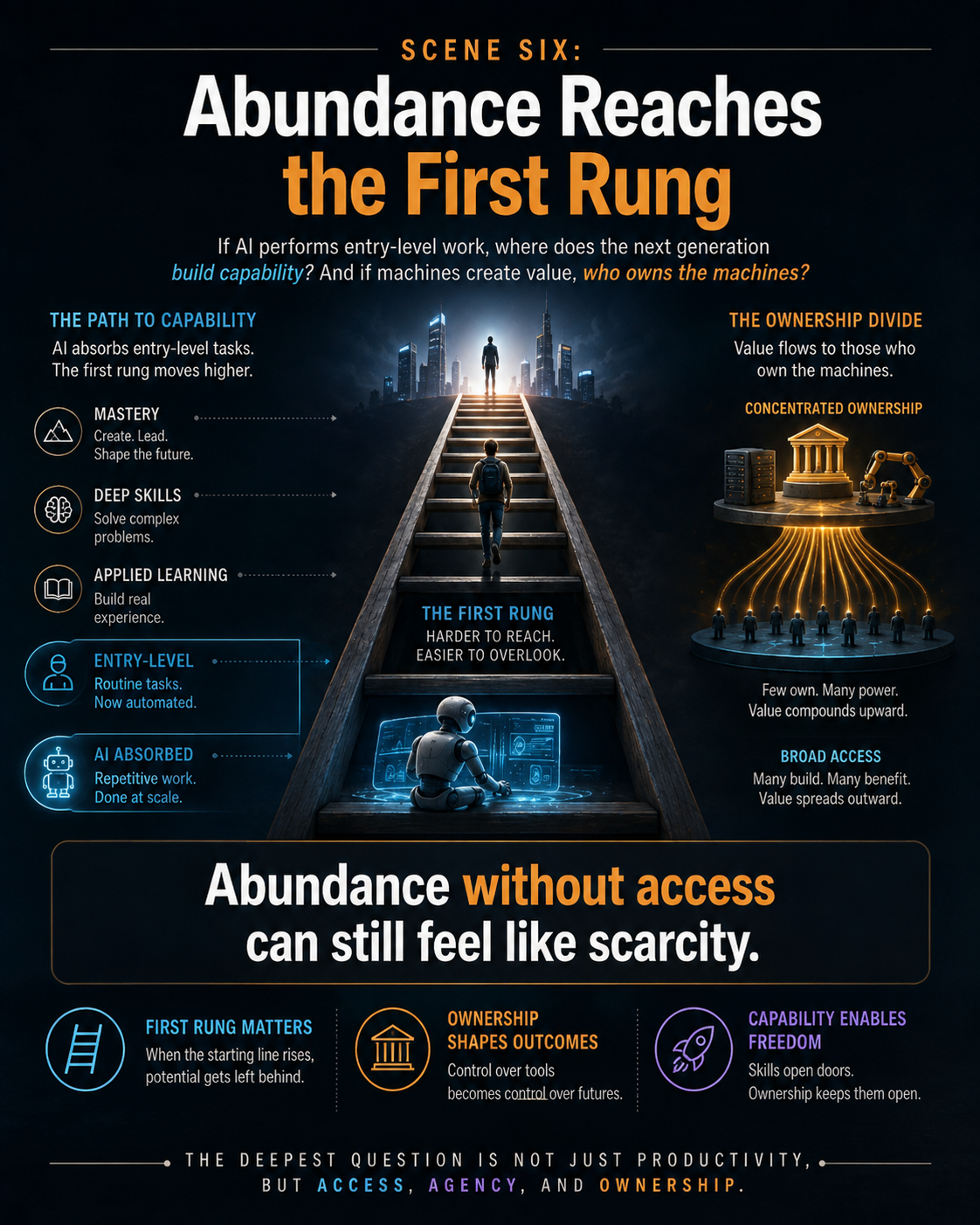
If AI performs the entry-level tasks through which people once learned a profession, where does the next generation get its first rung?
If machines create extraordinary value, who owns the machines?
Abundance without access can feel like scarcity. Productivity without new paths to capability, ownership, and agency can narrow the future instead of widening it.
The most important conversion may not be tokens into atoms, but capability into human freedom.
And yes, AI agents helped write it
Extensively. Deliberately. Without apology.
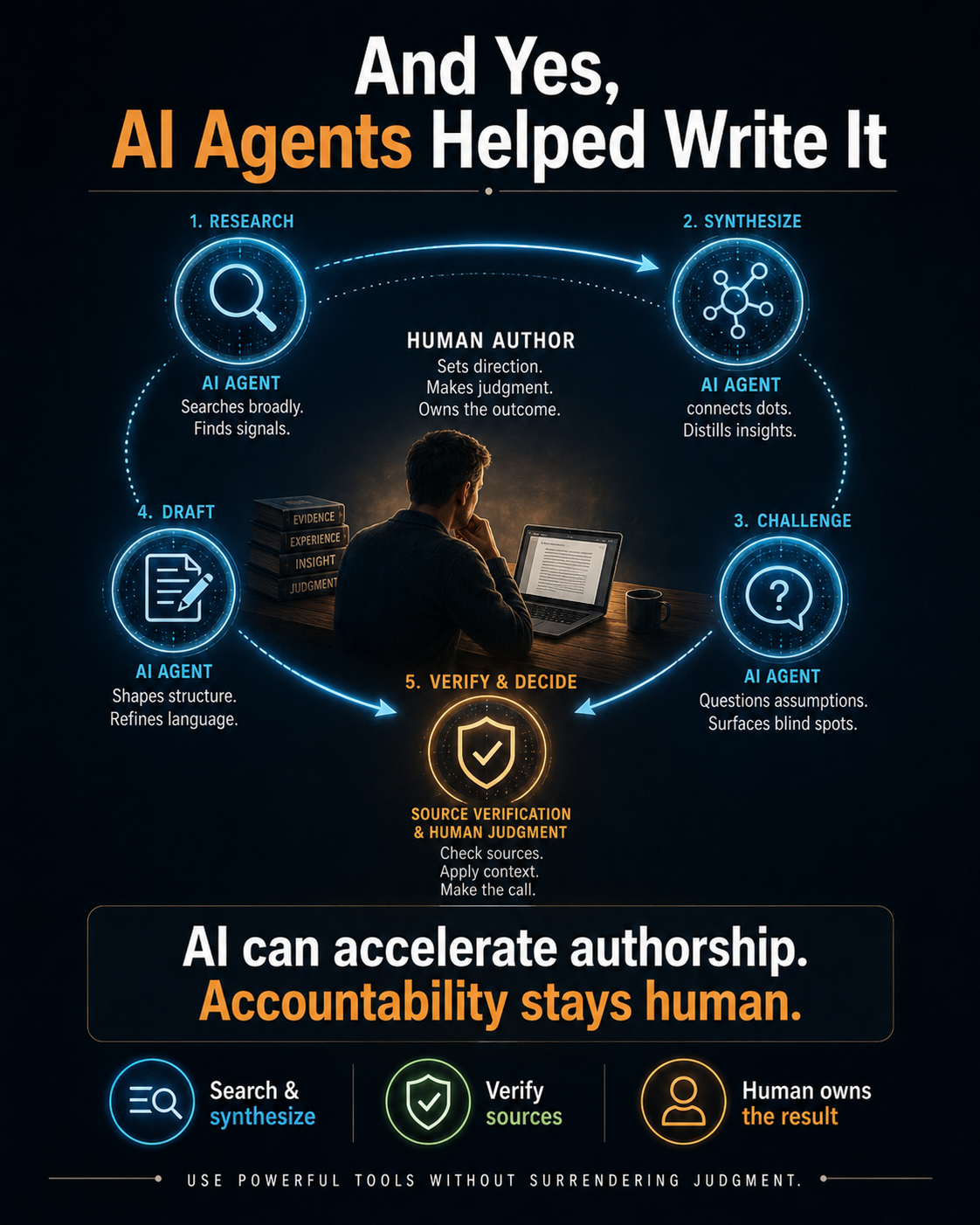
They helped me search, synthesize, challenge assumptions, test calculations, and critique drafts. It felt like the honest way to investigate digital abundance: by living inside it.
But agent agreement is not evidence. I trace consequential claims to original sources, resolve contradictions, make the judgments, and remain accountable for what carries my name.
I am also writing for my children - not to predict their job titles, but to shape how they see their future. I want them to look past the disappearing task and notice the unsolved bottleneck; to use powerful tools without surrendering judgment; and to believe civilization still has enormous room to improve.
That is my kind of optimism: ambitious about what could change, pragmatic about everything that must change with it.
I’m learning in public because people who build, operate, finance, regulate, teach, and live inside these systems will see what I cannot.
Explore From Tokens to Atoms and the wider Abundance Atlas.
Where, in your world, does digital abundance hit a physical wall - and what would it take to break through?